The Repo Truck of the Future? GM Goes Driverless
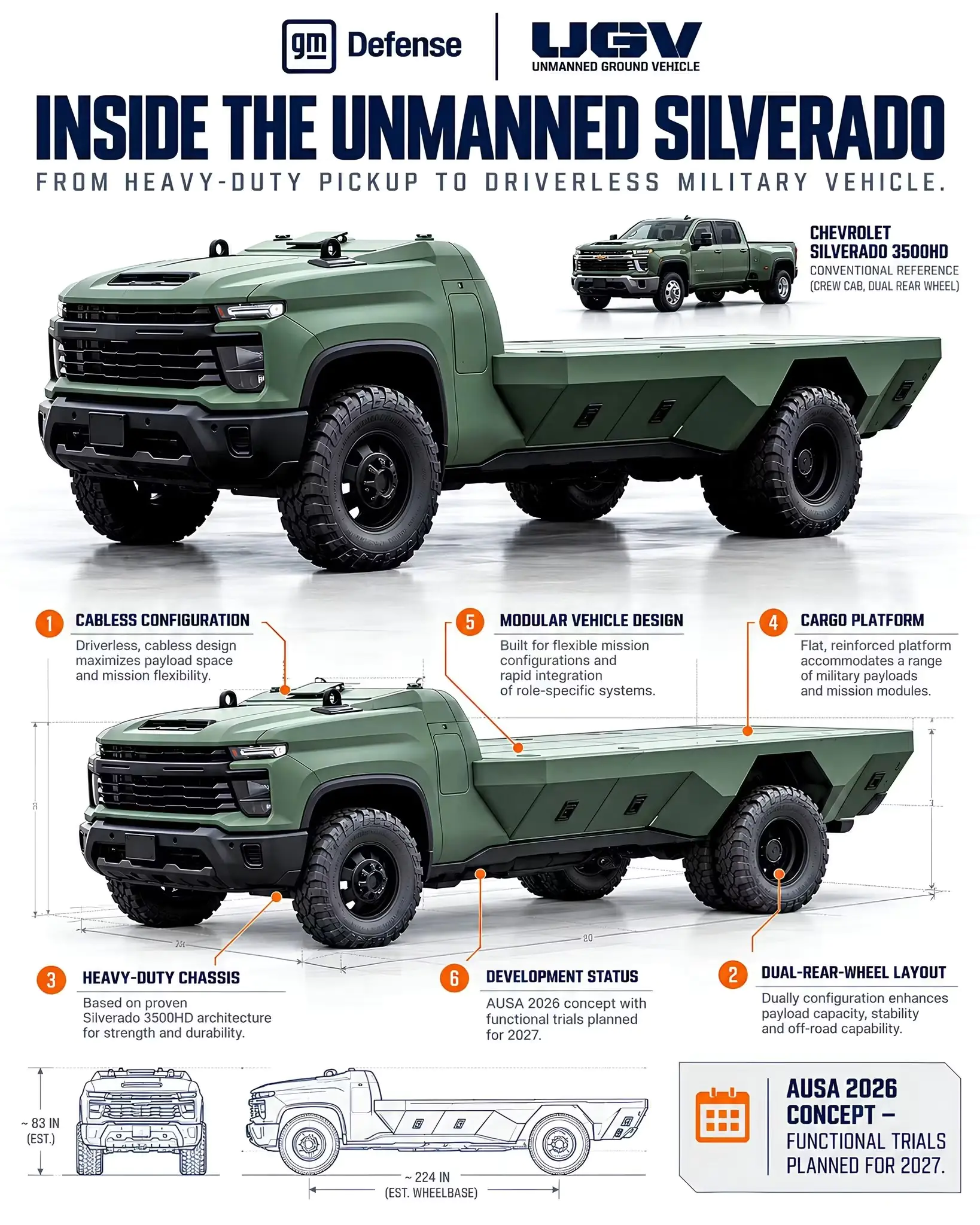
General Motors’ defense division recently unveiled an unmanned vehicle built around the Chevrolet Silverado 3500HD platform, offering a glimpse of a future in which a heavy-duty truck could transport supplies and perform assigned tasks without a driver onboard. The vehicle is a concept designed for military use, with functional trials targeted for 2027. But GM is not the only company exploring what happens when the person behind the wheel is no longer a requirement.
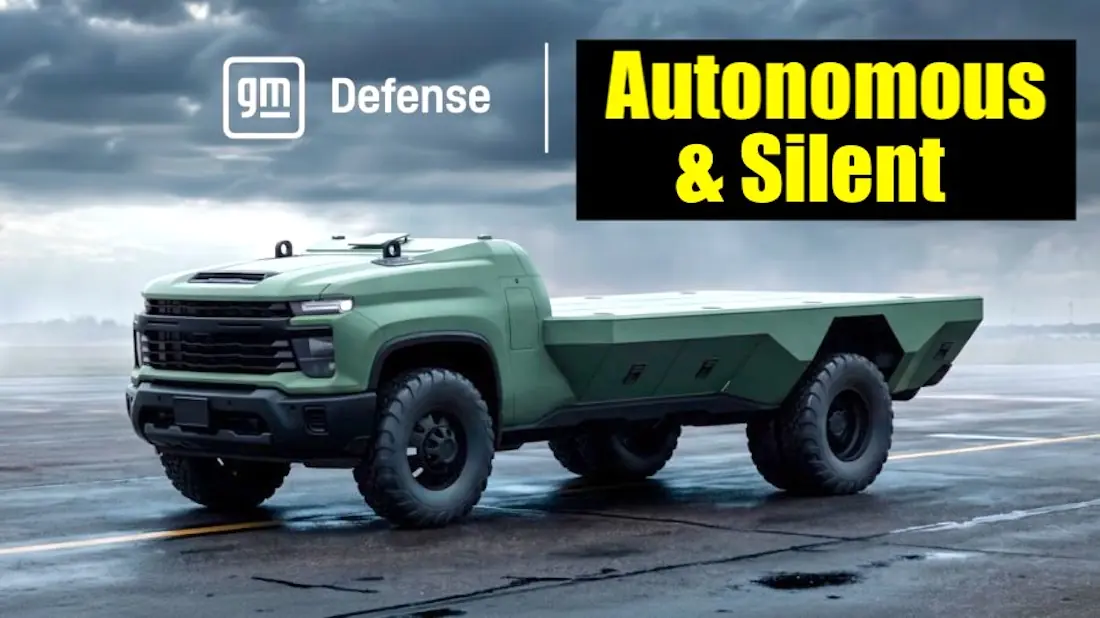
The GM Defense vehicle is designed for silent logistics and casualty evacuation. Its underlying platform takes advantage of existing automotive engineering while incorporating autonomous capabilities for military operations. It is not a production vehicle, and GM has not announced plans to offer a driverless Silverado for civilian use. Still, the concept raises an interesting question for industries built around moving, towing and recovering vehicles: how much of that work might eventually be automated?
In commercial transportation, Daimler Truck and its autonomous-driving subsidiary, Torc Robotics, are pursuing a different path. Their work centers on heavy-duty Freightliner trucks designed for driverless highway freight operations. The companies have been targeting commercial freight operations in 2027, followed by plans to scale in 2028. Highway trucking and vehicle recovery are very different jobs, but advances in autonomous steering, braking, perception and vehicle control could eventually influence a wider range of commercial equipment.
Autonomous towing is already being explored in more controlled environments. Bradshaw Electric Vehicles, working with autonomous technology providers, has developed systems for electric tow tractors used in warehouses, factories and airports. These vehicles can automate repetitive movements of goods and equipment along defined routes. Composiv’s MutoATT takes a similar approach, with an autonomous tow vehicle designed to move loads through industrial environments and connect and disconnect them automatically. Neither system is a public-road repossession truck, but both demonstrate that towing itself can be part of an automated operation.
Perhaps the most direct connection to the recovery business comes from an entirely different direction. ReefLiger, a defense systems integrator, is developing its Ghost Sled autonomous ground recovery system for military applications. The company’s proposed system is designed to reach disabled vehicles, perform recovery operations and help extract personnel in dangerous environments without requiring a soldier to be physically present at the recovery site. The project has been submitted to a U.S. Army innovation program. Its capabilities remain company-described development claims, rather than evidence of a commercially deployed recovery product.
Another piece of the puzzle is automated hitching. A U.S. Army-funded TeleSwivel project is developing a system intended to connect and disconnect towing equipment without a person manually handling the coupling. That may sound like a small detail, but connecting a tow vehicle to a disabled vehicle or trailer is a physical task that autonomous systems must solve before they can operate independently from start to finish.
What does all this mean for collateral recovery? It would be premature to suggest that autonomous repossession trucks are about to replace recovery agents. Locating a vehicle, determining whether access is lawful, navigating unfamiliar properties, positioning equipment and safely handling a vehicle in unpredictable conditions require capabilities that go well beyond following a mapped route. A truck that can drive itself is not necessarily a truck that can repossess a vehicle.
The more realistic future may begin with limited automation. Fleet vehicles could reposition themselves in controlled facilities, autonomous equipment could move vehicles around storage lots, and automated systems could eventually assist with certain towing and recovery tasks. Remote operation may also become useful in specialized situations where a vehicle can perform a task while its operator remains at a safe distance. Each application would have to overcome practical, technical, legal and economic obstacles before becoming commonplace.
For now, these projects represent different stages of the same broader shift. Some are concepts, some are industrial systems operating in controlled environments, and others are pursuing more demanding autonomous operations on public roads or in military settings. They should not be treated as interchangeable or as proof that fully autonomous vehicle recovery is imminent.
But the direction is worth watching. The future of vehicle recovery may not begin with a robot taking a set of keys from an agent. It may begin with the gradual automation of the truck, the tow connection, the movement of vehicles and the repetitive tasks surrounding the recovery process. The technology is still developing, but the question is no longer limited to whether a vehicle can drive itself. It is how much work that vehicle might eventually be able to do on its own.