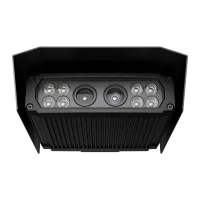
DeSantis Orders LPR Cameras Removed
When we published our story this morning about the growing political backlash against automated license plate recognition, the headline was that governors were beginning to question the technology. We now have something considerably more concrete to report: Florida has moved from questioning LPR to actually removing government-operated cameras.
Florida Gov. Ron DeSantis has ordered the Florida Department of Transportation to revoke approvals for automated license plate recognition cameras operated by local law-enforcement agencies within the right-of-way of the state’s highway system. The agencies have 30 days to remove the cameras, and FDOT says it will remove any equipment that remains after that deadline. New installations in those state-controlled rights-of-way will also no longer be approved. Multiple Florida news outlets have independently confirmed the action.
This is an important development to our original story because it changes the discussion from political rhetoric to an actual government restriction on LPR infrastructure. When we published this morning, DeSantis’ position was significant because he had publicly called the proliferation of Flock cameras “out of control” and expressed concern about Florida becoming a surveillance state. Now his administration has taken an actual step to reduce the presence of those systems on state roads.
There is an important distinction for the repossession industry. Florida has not banned LPR, and this order does not make it illegal for a private repossession company to operate an LPR system. The FDOT action is aimed at government-operated systems located within state highway rights-of-way. Privately operated cameras on private property are not covered simply because of this order.
But there is an even more interesting development. Some local law-enforcement agencies are going beyond what FDOT has ordered. Jacksonville Sheriff’s Office has announced that it will discontinue its LPR program throughout Duval County, while other Florida agencies have begun disconnecting or reconsidering their systems. In other words, the impact isn’t necessarily stopping at the state highway right-of-way.
The argument surrounding LPR is increasingly changing from “Can a camera read a license plate?” to “What happens with the information after it is collected?” Retention, sharing, access, historical tracking and the ability to reconstruct someone’s movements are becoming the central issues. Florida’s action doesn’t answer those questions for the private collateral recovery industry, but it demonstrates that governments are willing to take concrete action when they believe the technology has crossed an acceptable line.
It also reinforces the significance of what is happening in Pennsylvania and Texas. Pennsylvania Gov. Josh Shapiro has expressed support for a statewide ban on Flock and similar networked systems, while lawmakers from both parties are working on legislation ranging from outright prohibitions to restrictions on mass tracking. Texas has also taken action involving state funding for Flock systems while local governments debate whether to continue using them.
Three governors. Three different approaches. One increasingly familiar issue.
None of this means the repossession industry should declare the death of LPR. It doesn’t mean commercial LPR is suddenly illegal. It doesn’t mean a camera mounted on a repo vehicle is going to be confiscated tomorrow.
It does mean the industry should stop assuming that the LPR environment of the last decade is guaranteed to be the LPR environment of the next decade.
This morning we wrote that the political tide surrounding LPR may be turning.
By tonight, Florida has given us something more than a political statement.
They’ve started taking the cameras down.