Repo Trucks. The Torque War
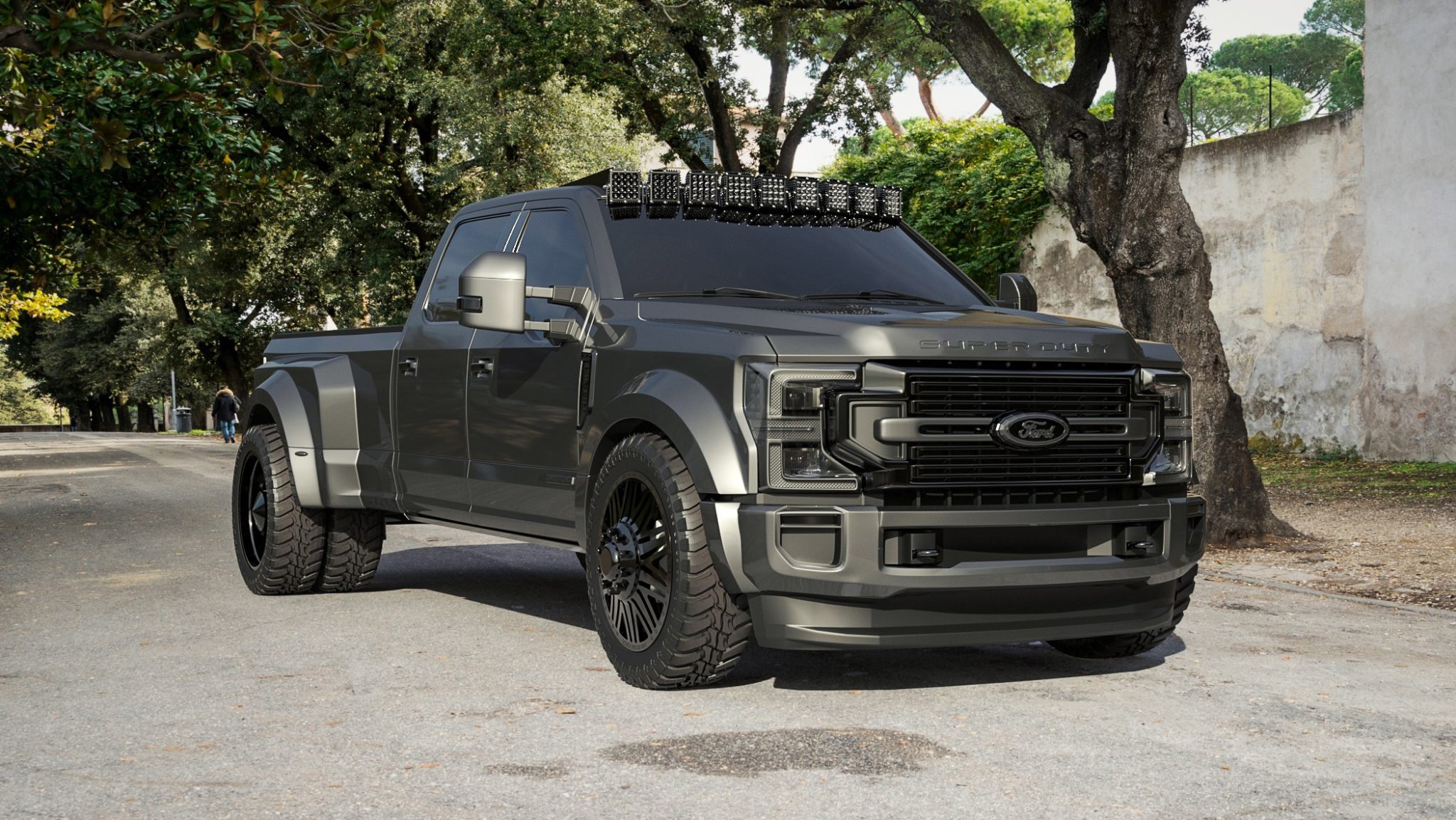
There was a time when a repossession truck didn’t need to be particularly impressive. It needed to start every morning, get decent traction, pull a vehicle onto the wheel-lift and survive another night on the job. Those days may be disappearing. The heavy-duty pickup market has become a horsepower-and-torque arms race, with today’s diesel pickups producing numbers that would have sounded ridiculous to a repo man 20 years ago. Ford’s high-output 6.7-liter Power Stroke now produces 1,200 lb.-ft. of torque, while Ram’s high-output 6.7-liter Cummins produces 1,075 lb.-ft., and GM’s 6.6-liter Duramax comes in at 975 lb.-ft.
The manufacturers are clearly fighting for bragging rights. But what does that war have to do with repossession? Quite a bit, actually. A tow operator hauling a properly loaded trailer generally knows what he’s pulling. A repo operator often doesn’t. The collateral might be a compact sedan or a 7,000-pound SUV. It might be sitting on level pavement, buried axle-deep in mud, nose-first against a curb or parked somewhere that makes recovery considerably more complicated. Then there are the vehicles that seem to have been designed specifically to make a repo man’s life miserable: AWD, four-wheel drive, electronic parking brakes, low-clearance bumpers, massive wheels and tires, and vehicles that simply weigh considerably more than the cars repossessors were recovering 15 or 20 years ago.
That’s where torque becomes more than a number in a manufacturer’s brochure. Torque is rotational force, and in practical terms, it’s what helps a truck get something heavy moving. Getting something moving is often the hardest part of a recovery. Once the vehicle is rolling, the situation changes. But overcoming that initial resistance—particularly on an incline, loose surface or with a disabled vehicle—is where the grunt of a modern diesel can become extremely useful. That’s one reason the modern heavy-duty diesel pickup has become such a capable piece of recovery equipment. Ford’s 1,200 lb.-ft. of torque isn’t simply a bragging number. The high-output Power Stroke produces its peak torque at relatively low engine speed, exactly where a recovery truck spends much of its working life.
But bigger isn’t always better, and that’s where the repo business differs from the towing industry in general. A repo truck isn’t necessarily being asked to pull 30,000 or 40,000 pounds. Most recoveries don’t require anything close to the maximum rated towing capacity of an F-350, F-450 or Ram 3500. What a repossessor really needs is controlled power—the ability to move the collateral without excessive wheelspin, climb a steep driveway, get out of a muddy lot, maneuver disabled collateral and do it repeatedly without abusing the truck, transmission or recovery equipment.
| Truck | Diesel Torque | Max Available Towing |
|---|
| Ford Super Duty HO Power Stroke | 1,200 lb.-ft. | 40,000 lbs. |
| Ram HD HO Cummins | 1,075 lb.-ft. | 36,610 lbs. |
| Chevrolet Silverado HD Duramax | 975 lb.-ft. | 36,000 lbs. |
| GMC Sierra HD Duramax | 975 lb.-ft. | 36,000 lbs. |
And that’s where the torque war gets interesting. The 2026 numbers are impressive: Ford’s high-output Super Duty leads the pickup class with 1,200 lb.-ft., Ram follows with 1,075, and GM’s Duramax delivers 975. Ford’s properly equipped Super Duty can tow up to 40,000 pounds, while Ram’s 3500 is rated for as much as 36,610 pounds and GM’s heavy-duty pickups reach approximately 36,000 pounds in maximum towing configurations. Those numbers are far beyond what the average repo operator needs—but that doesn’t mean the capability is irrelevant. A recovery truck spends its life in circumstances where having too much capability is generally preferable to discovering that it doesn’t have enough.
There is, however, another number every repo operator needs to consider: weight. The truck itself is part of the recovery system. Add a wheel-lift, tools, chains, dollies, fuel, passengers and everything else that permanently resides in a repo truck, and the towing number on the manufacturer’s website becomes only one piece of the equation. The best repo truck isn’t necessarily the truck with the biggest number. It’s the truck with the right combination of torque, gearing, traction, wheelbase, maneuverability, payload, reliability and operating cost for the work being performed.
And there is a dirty little secret behind the torque war: more capability costs money. A modern diesel HD pickup can become a six-figure proposition once the right configuration, four-wheel drive, diesel engine and recovery equipment are added. Then comes diesel fuel, tires, insurance, maintenance and depreciation. For a repossession company, the truck isn’t a toy. It’s production equipment. A truck that spends most of its life recovering 3,500-pound sedans doesn’t necessarily need 1,200 lb.-ft. of torque. A company routinely recovering large SUVs, heavy-duty pickups and disabled vehicles in difficult terrain may have a very different calculation.
The manufacturers will continue fighting over horsepower. They’ll fight over torque. They’ll fight over towing records measured in tens of thousands of pounds. That’s fine. But repossessors have a different scoreboard. How many recoveries can it perform? How well does it handle difficult collateral? How does it perform in mud, snow and tight spaces? What does it cost per mile? How long does it stay on the road? And perhaps the most important question: Can it pull the collateral without becoming collateral itself?
The torque war isn’t really about who has the biggest number. For the repo man, it’s about having enough muscle when the vehicle on the hook decides it doesn’t want to move. And these days, the truck sitting in the driveway has more muscle than some commercial trucks had not that long ago.